TL;DR
It was a short day today, mild outdoor conditions for New England in December, but also worth winding down early. Sometimes the game is elsewhere; you can smell it in the wind, and indeed I found it waiting for me on a pool table.
Meat Isn’t on THAT Menu
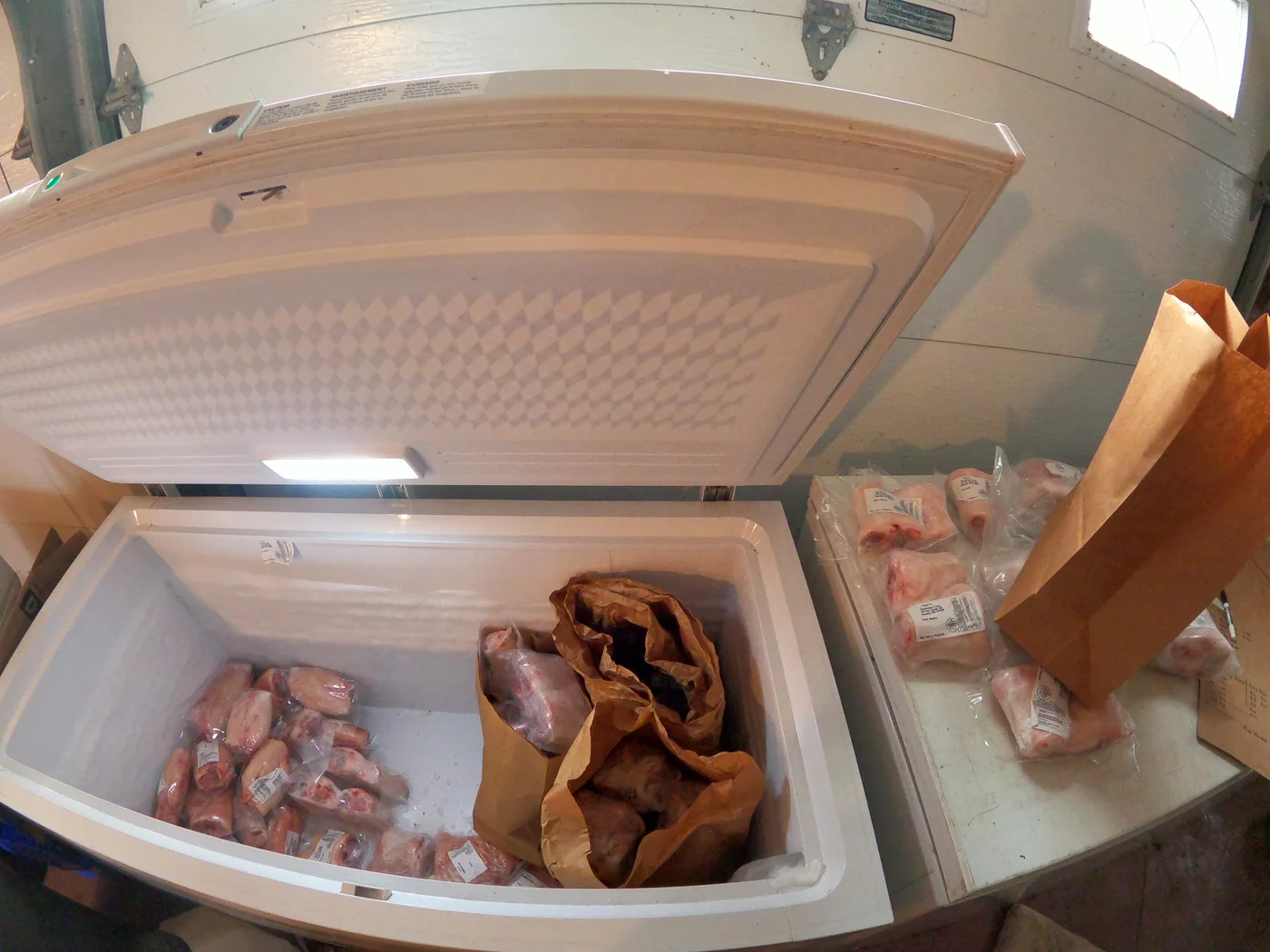
I’d like to think that the pigs, despite their economic worth on some spreadsheet versus how much loving care they get in their short lives with this farm, are valued in their whole once slaughtered. After sailing the seas of (head) cheese because I felt a moral imperative to respect everything coming from the animal, I can say that the effort involved in processing a half of a pig’s head is more than the mediocre epicurean deserves.
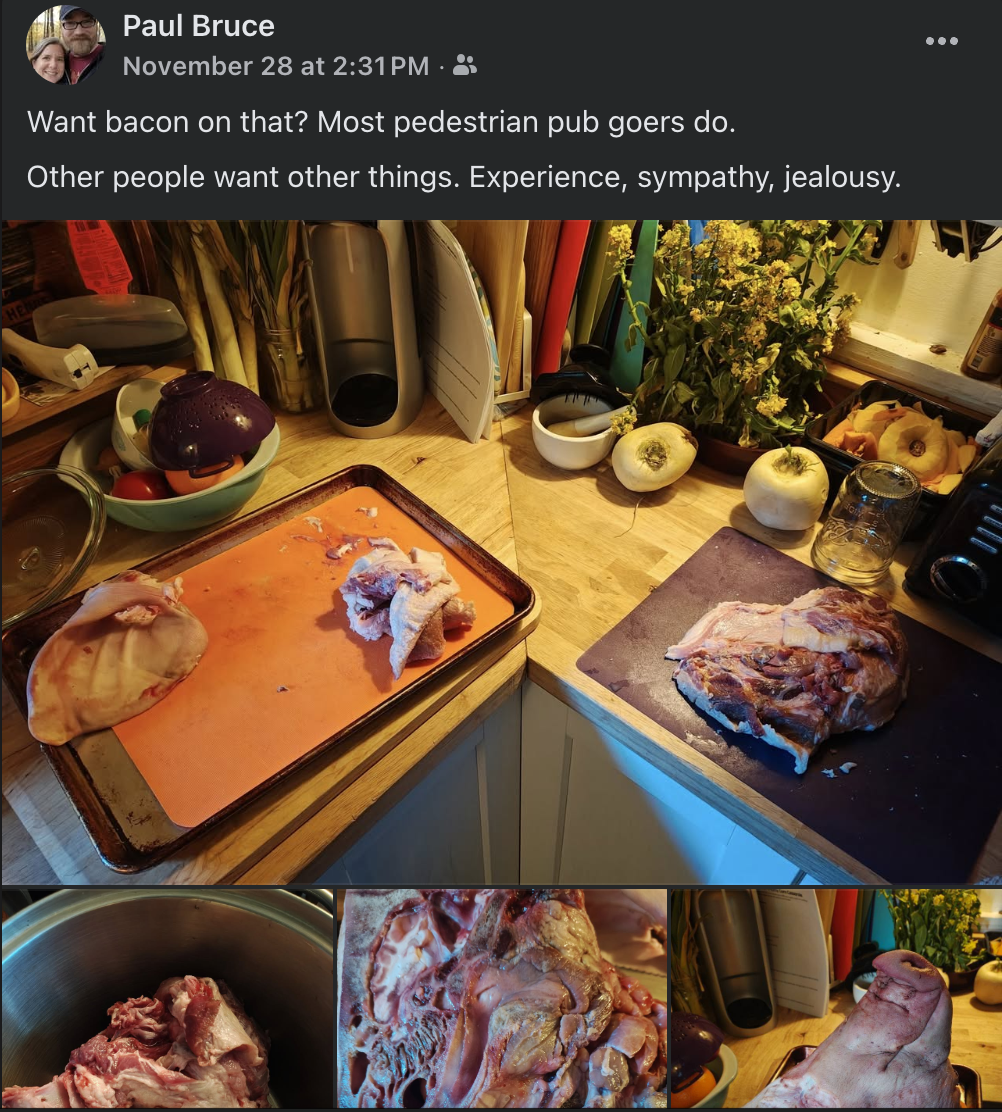
In this country, pork is highly profitable. Two years ago I bought $500 worth of pork belly for my holiday, now it’s a totally different relationship wherein others profit from me taking care of these animals. We are all tradeable meat just the same as these porcine wonders though. The delights and the debaucheries enabled by skilled and knowledgeable work are always exploited by the expenditures of the economically fortunate. But if it’s in someone’s budget to buy tenderloin and bacon and ribs nicely cleaned up and ready for a home cook, it’s also in someone entirely else’s budget to respect the rest of that creature by using all of it.
An Upton of Synthesis
At one point in human history, the statement “It is difficult to get a man to understand something when his salary depends on his not understanding it” was written down on paper because people were losing fingers and jobs and more to poor management practices in the meat packing industry. Later in that same culture, others voiced tribute to that insight, but about other industries and to audiences full of cuddled runts like me (Abstractions Conference, Pittsburgh 2016). At least these days, I’m less subservient to high tech overlords and can handle frozen meat without gloves.
In a race for resources and control, some folks clearly have advantage over others. Caring more about yourself than others and knowing how to use that affinity…well that wins in our global economy. Some people work hard even when the boss isn’t around while others don’t. Some speak up about things that matter while others who don’t have the freedom or safety to do so naturally remain silent.
“The wolves are always hungry” was something a friend told me once. Yesterday, it was “the sharks are always biting”. It has always been difficult for me to understand how humans can be so selfish and so willing to exploit others for their own gain, but maybe that just means that my former salary depends on me not understanding this…in other words, being ignorant to how exploitative employers can be.
The World Is Over-run…
In Yasiin Bey’s starting track on the 1999 album ‘Black on Both Sides’, there’s a line “The world is over-run by the wealthy and the wicked”. Notwithstanding the religious overtones of this track, I thought about those words a lot before lunch…the choice to couple the words ‘wealthy’ and ‘wicked’ up together. Then I thought about the pigs and profitability again.
In well established industries, margins are very small, not simply because of the effort required to perpetuate them but because of the exploitative rules built in. Everyone needs to be able to take their cut of profits, but often those who do the hard work and take the risk to do so are payed the least. If compensation was linear to effort, most farmers would own the land they work, make a living off of it and regenerate it at the same time. But this is not how the real world works, wealth almost never comes solely from working hard though this is necessary in most cases too, but rather from the ability to control and manipulate.
I don’t see this changing, certainly for farmers, any time soon or maybe ever. The food system is broken and exploited so much already. Even if a farmer owns their own land, which itself comes with its own risks, the cost alone (at least in Massachusetts) for insurance, property taxes, and inputs far exceeds what people are trained to consider fair pricing for organic produce and meat. There are always equity lords of some kind that have more control over those who don’t. In high tech it’s bankers over investors and investors over boards and boards over CEOs and C-levels over VPs and directors and directors over managers and so on. In farming, there’s sharks that are biting and wolves that are howling and deer that are running. I won’t contribute toxic positivity to the matter, the situation sucks.
For those who want to do nothing else, people who love to grow and work hard and are incredibly skilled at many things needed to run a farm, this is the system they have to work within. At the end of the day, it’s about what can be bought and sold…hopefully at a fair price and things other than one’s soul.
A Later Chance Encounter
After work, I wrote this blog and then played a few frames of pool with a local celebrity chef. I asked him how life was going since winning and talked with him a bit about my new venture next year. Surprisingly, the thing that got him most excited was the beets, which have many uses in high-end sushi and other dishes. So maybe today’s disappointments were the price I had to pay for this chance encounter later on.
I really have to start carrying sample product in my car for moments like this. I think I would have gotten a purchase order out of it today, but neither can I legally sell them yet though I’m rapidly working towards that, nor do I want to be ‘that guy’ who’s always trying to hawk his product.
AI Summary from Field Notes
It’s funny, some days what this LLM-driven process picks up on even if I don’t say it in the transcript. “Plan efficient transport schedules” is a polite way of saying something that I wouldn’t bother visiting in person, but it’s not wrong. I mean, it’s not like I’m swimming in shark-infested waters.
Summary
Consolidated Summary
Main Themes
- Farm Operations & Logistics: Egg delivery, meat inventory, field cleanup, and equipment management.
- Field Maintenance: Removal of electric fencing, debris, and pigtail posts.
- Weather & Labor: Impact of cold weather (40°F) on efficiency and worker safety.
- Sustainability: USDA labeling, organic egg sourcing, and eco-friendly practices.
Key Activities
- Egg Delivery: Distributing farm-fresh, organic eggs to customers.
- Meat Inventory: Preparing and packaging frozen meat for a recurring share program.
- Field Cleanup: Removing electric fencing and debris, managing pigtail posts.
- Collaborative Tasks: Using the gator (truck) to transport heavy materials.
- Weather Adaptation: Adjusting workflows for cold-weather conditions.
New Insights & Discoveries
- Pigtail Post Handling: Need for standardized separation to reduce entanglement.
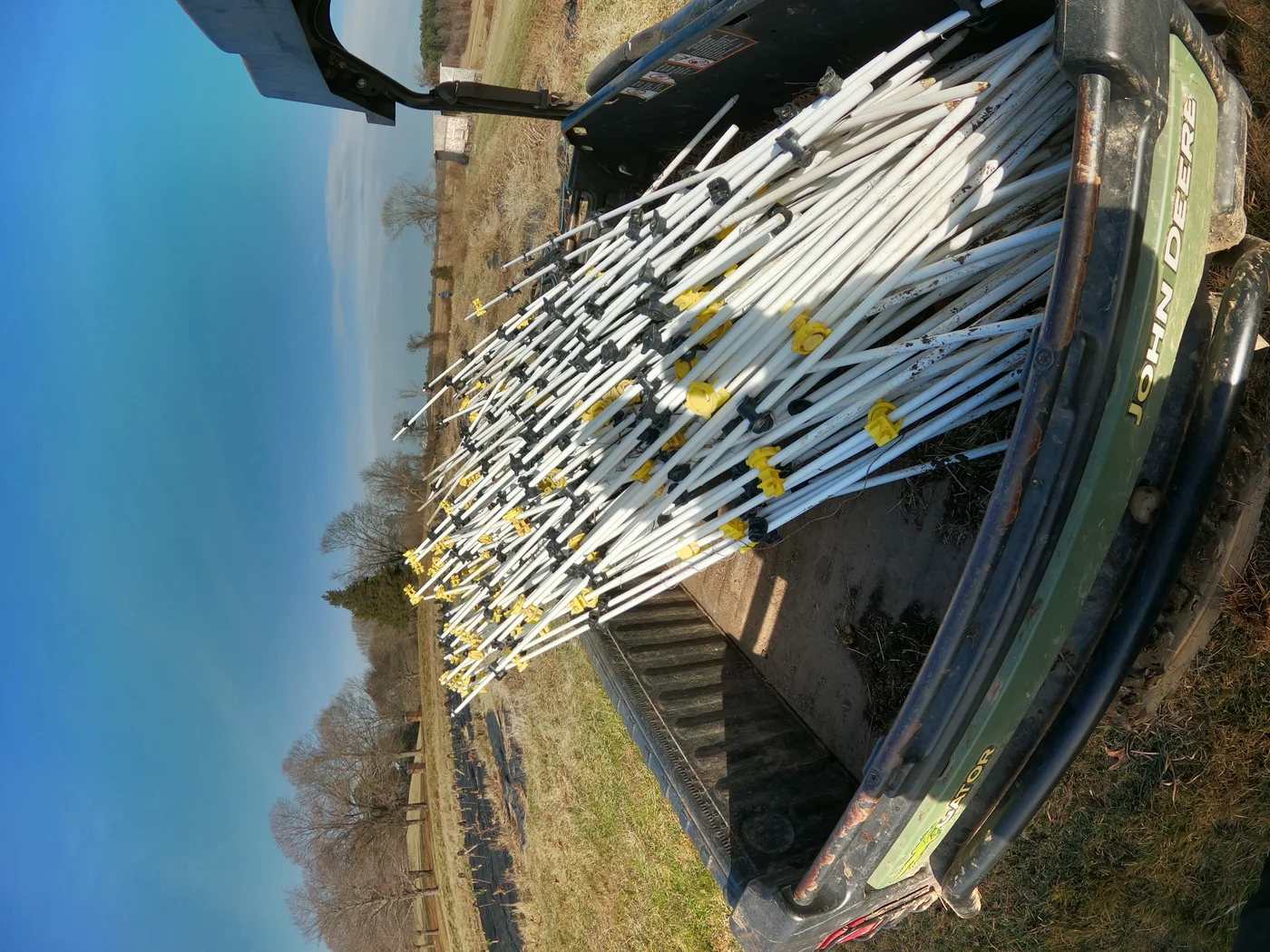
- Gator Usage: Efficient transport of fiberglass poles and electric fence materials.
- USDA Labeling: Specific requirements for frozen meat (e.g., “USDA” tags).
- Organic Egg Value: Benefits of farm-fresh, organic eggs compared to commercial alternatives.
- Meat Share Logistics: Preparing meat for a recurring share program with distribution details.
Questions for Future Research
- Logistics Optimization: How to streamline pigtail post separation and gator route planning?
- Weather Impact: Strategies to mitigate cold-weather effects on field work and equipment.
- USDA & Organic Sourcing: Requirements for labeling and cost-benefit analysis of organic eggs.
- Meat Share Process: Details of distribution, customer expectations, and communication.
- Field Efficiency: Tools or methods to reduce physical strain during cleanup.
Recommended Actions
- Standardize Pigtail Post Handling: Develop a protocol for separation to improve efficiency.
- Invest in Weather-Resilient Gear: Use insulated gloves, reinforced tools, and protective equipment.
- Document Meat Share Process: Create a guide for customers and staff on preparation and distribution.
- Optimize Gator Routes: Plan efficient transport schedules for heavy materials.
- Track Weather Data: Record temperature and precipitation to assess their impact on operations.
This summary captures the core elements of the original, focusing on clarity, structure, and actionable insights.
Part 1
Main Themes
- Farm Operations and Logistics: Egg delivery, meat inventory, field cleanup, and equipment management.
- Field Maintenance: Removing electric fencing, collecting debris, and organizing materials.
- Weather and Labor: Working in cold conditions (40–45°F), physical labor, and the impact of weather on farm tasks.
- Sustainable Practices: USDA-labeled products, organic egg sourcing, and separating materials for efficient logistics.
Activities Performed by the Intern
- Egg Preparation and Delivery:
- Brought 70 dozen eggs for the general store and 80 dozen for a local pasta maker.
- Documented egg quality and sourcing (organic, farm-fresh).
- Meat Inventory:
- Weighed and labeled frozen meat items (spare ribs, pork hocks, pork chops).
- Packaged items for the meat share (first week of the month).
3.ed Field Cleanup:
- Collected tomato steaks for storage.
- Removed electric fence poles and spools, separating pigtail posts for easier handling.
- Transported materials to storage sheds and utility areas.
- Collaborative Tasks:
- Washed bins with a colleague.
- Organized fiberglass poles and pigtail posts for efficient logistics.
- Weather and Physical Labor:
- Worked in cold weather (40°F), carrying heavy materials (fiberglass poles).
- Noted the importance of weather conditions for outdoor tasks.
New Things Not Yet Encountered
- Pigtail Post Separation: A method to prevent entanglement by splitting posts into head and foot sections.
- Gator Usage: A vehicle used for transporting heavy materials (fiberglass poles, electric fence).
- USDA-Labeled Products: Specific requirements for labeling frozen meat (e.g., “USDA” tags).
- Meat Share Logistics: Preparing meat for a recurring share program, which involves packaging and distribution.
- Organic Egg Sourcing: The value of farm-fresh, organic eggs compared to store-bought alternatives.
Questions and Future Research Areas
- Logistics Optimization:
- How can pigtail posts be further separated to reduce handling time?
- What is the most efficient way to transport heavy materials (e.g., fiberglass poles) using the gator?
- Weather Impact:
- How does cold weather (40°F) affect the efficiency of field work?
- Are there strategies to protect equipment or materials in low-temperature conditions?
- USDA Labeling and Sourcing:
- What are the specific requirements for USDA-labeled frozen meat?
- How does organic egg sourcing compare to commercial egg suppliers in terms of cost and quality?
- Meat Share Program:
- What are the logistical details of the meat share (e.g., distribution, customer expectations)?
- How can the farm improve communication with customers about the meat share?
- Field Cleanup Efficiency:
- Are there tools or methods to streamline the removal of electric fencing and debris?
- How can the farm reduce physical strain on workers during cold weather?
Suggestions for Improvement
- Standardize Pigtail Post Handling: Develop a protocol for separating pigtail posts to minimize entanglement.
- Weather-Resilient Equipment: Invest in gear (e.g., insulated gloves, reinforced tools) for cold-weather operations.
- Document Meat Share Process: Create a guide for customers or staff on how the meat share is prepared and distributed.
- Optimize Gator Use: Map out routes or schedules for transporting materials to maximize efficiency.
- Track Weather Impact: Record weather data (e.g., temperature, precipitation) to assess its effect on farm tasks.
This structured approach highlights the intern’s role in farm operations while identifying opportunities for innovation and efficiency.
[end of post]
Enjoy Reading This Article?
Here are some more articles you might like to read next: