TL;DR
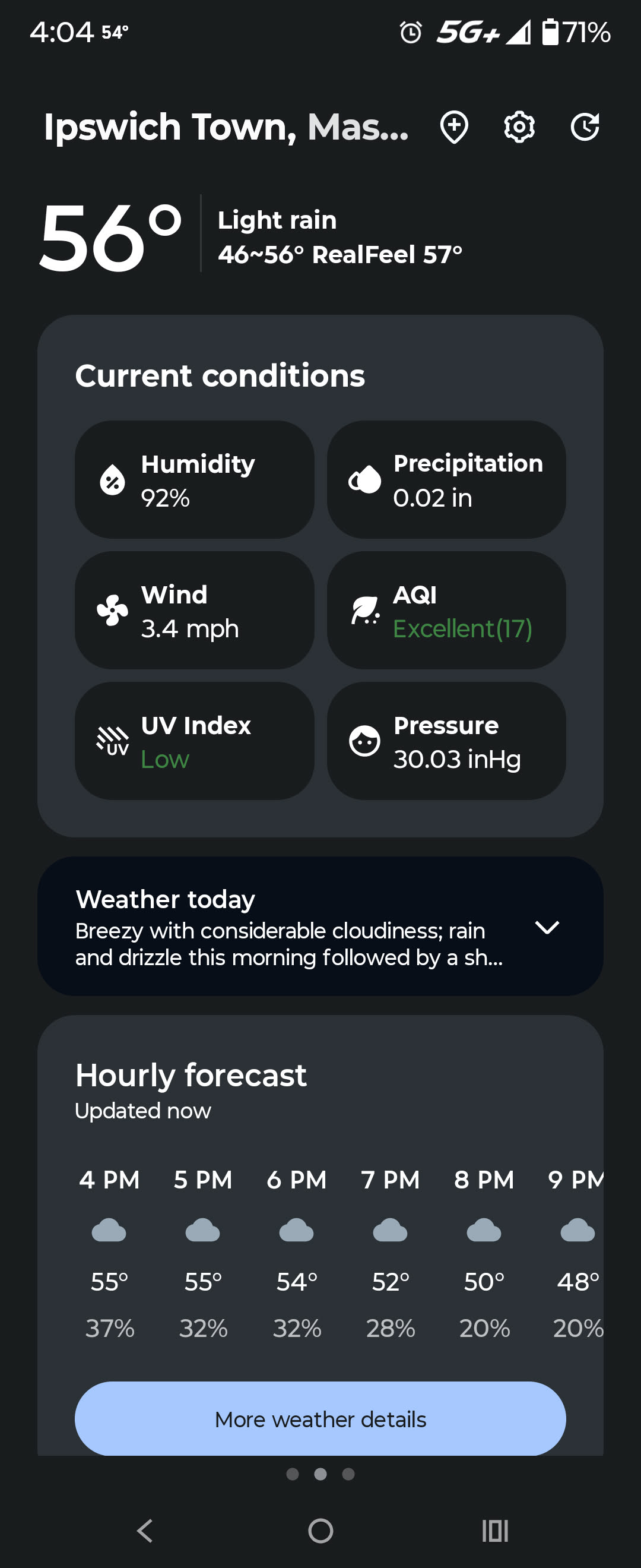
We moved coops, harvested, and worked on projects a bit. It was a bit rainy in the morning, but an extra change of clothes did the trick, just like yesterday.
Moving the Coops
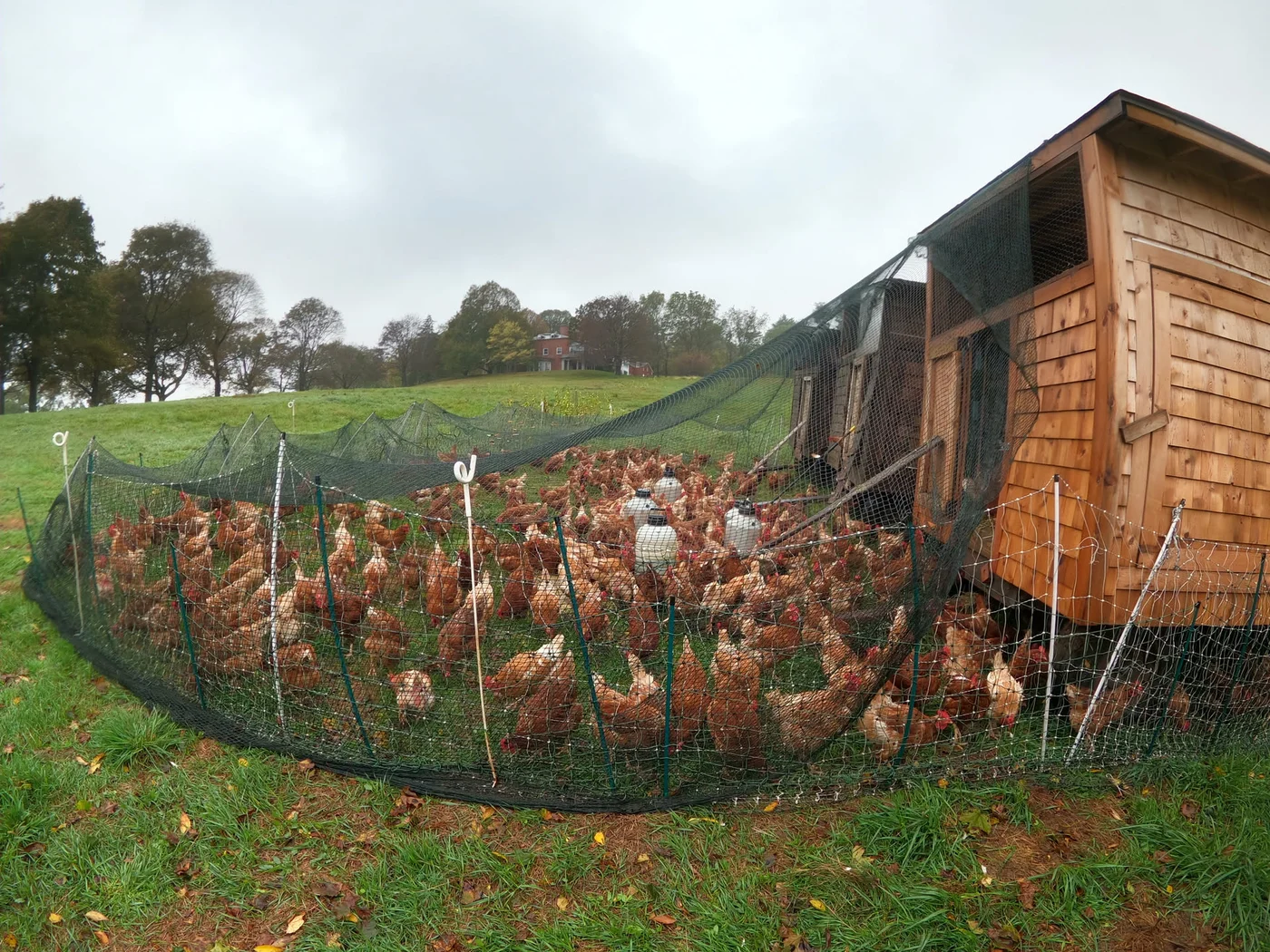
Why can’t you call it a chicken coop if it’s got four doors on it? Because then it would be a chicken sedan.
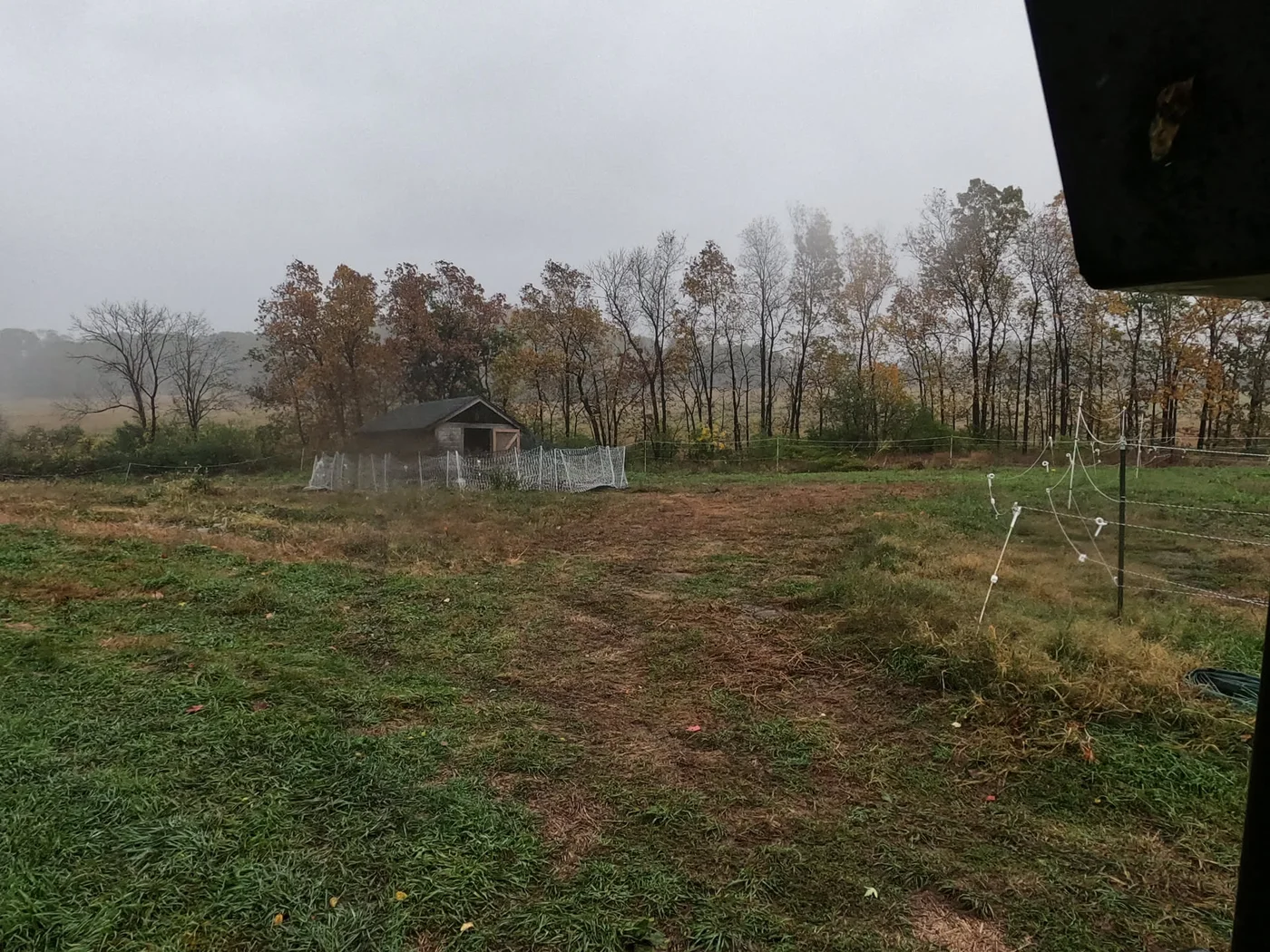
Well we moved the meat bird coops up the field a bit where once watermelon and squash grew just a few months ago. Though this batch of chickens will be gone in about 5 weeks, there’s another one already to take their place, so the coop will still be in operation for a while. However, coops won’t need to be moved around so much in the winter time once they’re put in a place for rest until the spring.
Oh Deer
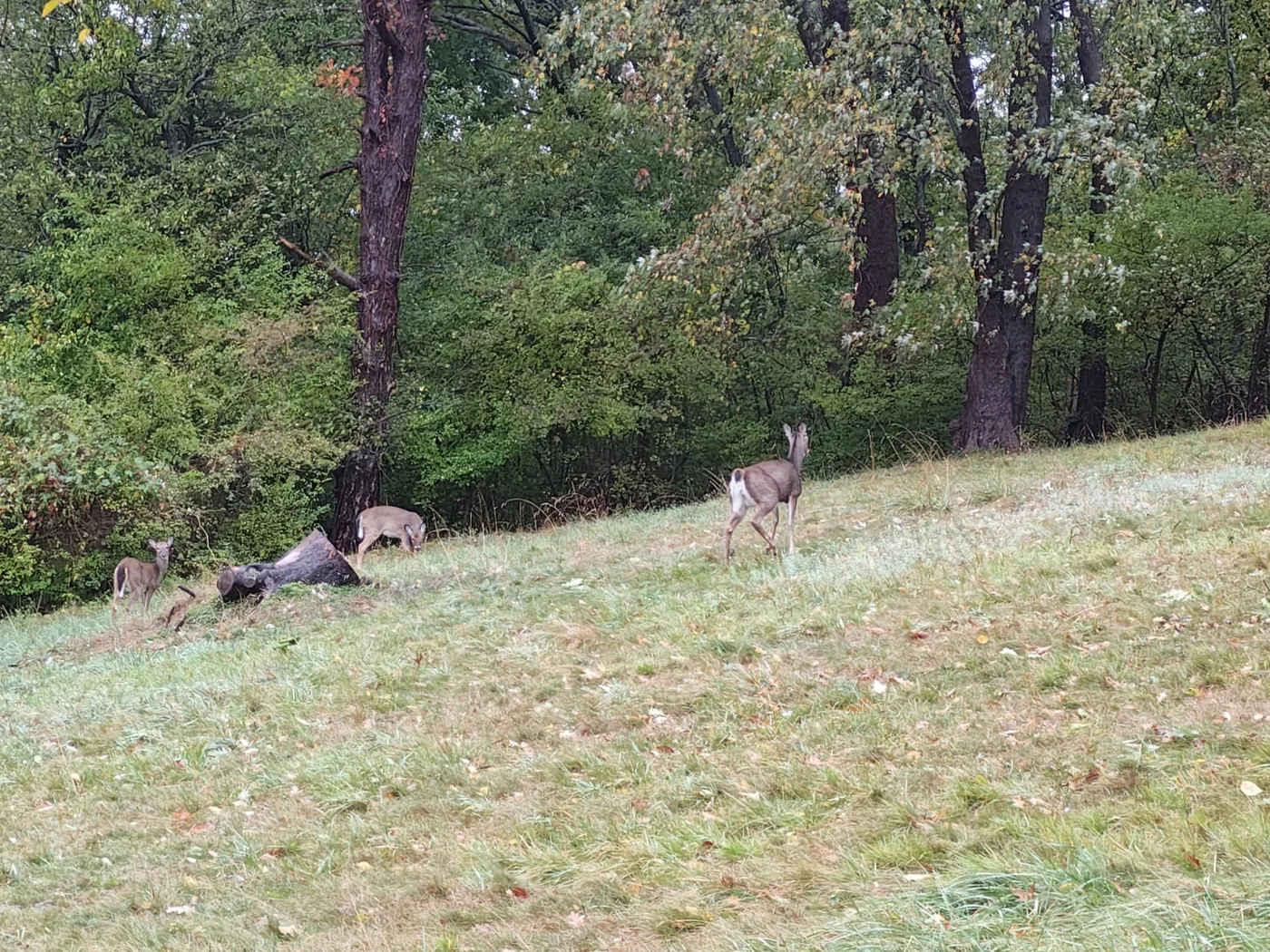
Today there was a noticeable increase in deer activity. Just about every drive from field to garage, we saw them from the road and hill. They just stood there and stared right back at us, but always in groups of at least three (at one point six). Many of them are not yet adult size and may not have earned a healthy fear of humans. I’m surprised that we haven’t also seen more coyotes recently.
More Chickens
We took some time to construct a temporary enclosure from wood and poly panel scrap to host the new meat bird chicks. Another 150 will take the place of the teen ones currently in the coop once they get sent off to become part of the December meat share distribution.
Being in the nursery greenhouse, it especially reminds me that these chickens are effectively seedlings, however cute they are. We take really good care of all the animals here, but at the end of the day they’re being raised to be high quality food, and in that way similar to the vegetables we carefully cultivate and harvest.
The fact is that if you aren’t okay with that fact then maybe you shouldn’t eat meat. People that talk about getting attached to baby chickens and pigs and cows have that luxury because of the people who know better and still take good care of the animals. I’m working in a space committed to organic and humane farming, not a ‘factory farm’ where living things go in one end and pies come out the other.
No matter where you get it from, before you call it meat, it’s called “livestock” for a reason: it’s alive and its stock. Still, there are big differences between these chickens I know because I take care of and the plastic-wrapped roasted chickens at the supermarket. The latter is betting on you not caring where they came from, what it took to raise them, or how safe it is to eat.
Preparing for the Potluck
We have a CSA member potluck coming up on Sunday and I’m excited to share some of the things we’ve been working on. I’ll be bringing some of the dehydrated produce I’ve been working on for people to try, hopefully provide feedback on later.
Around the farm, we’ve been starting to do small projects to prepare for visitors and for the winter. Cleaning up the nursery greenhouse last week was one of them. The weather looks to be nice on Sunday, but if it changes, another project will be to clean out the upstairs of the barn where the drying onions are stored. This space is large enough to set up the rental tables and chairs for a few dozen people.
Another thing is to set up a way for people to easily send us their recipes and share them with the community. At least at first, I’m thinking of doing this with free and low tech solutions, such as a simple online form that dumps the info into a spreadsheet for later review by Jamie. This can later be used to drive publishing in a somewhat automated fashion, but worst case it’s just copy-and-paste from a central location. This also allows us to track who submitted what and when, which can be useful for attribution and recognition. And of course there are ways to set up notifications so that Jamie knows that there are new submissions waiting for review. This doesn’t have to be done by Sunday, but that’s my stretch goal so that there’s something to share, maybe little printed QR codes for the tables or something easy to capture with a phone for later.
AI Summary from Field Notes
From last weekend’s work to add observability for LLM confusions and over-thinking, today’s summary seems to prove that it’s important to always be thinking of ranges rather that absolute values when it comes to measurement and performance to goal. Case in point, today like many other days, there are natural occurrences of the LLM reasoning properly generating reasoning text that mentions “wait”, such as:
“Wait, the user also asked for questions and future areas of research.”
This is just an artifact of the way the LLM was trained to statistically generate the next set of characters, words, and sentences as internal additional context for generating the final output. This is a common occurrence in language models and is not a sign of confusion or over-thinking.
So when I initially set up the alerting thresholds to only fire after a few occurrences of ‘confusion keywords’, this was a correct hypothesis about margin of error. I’d like this to get more precise, such as smarter pattern matching and keyword permutations, but the baseline code is there for later augmentation. Anyway, here’s what the LLM produced as a summary today:
Summary
Main Themes
- Weather Conditions: Cold, windy, and rainy weather impacting farm operations.
- Chicken Coop Management: Moving and adjusting meat bird and laying hen coops for efficiency.
- Deer Population: High deer activity threatening crops and fencing.
- Farm Maintenance: Tasks like transferring squash, repairing fences, and creating enclosures.
- Innovation: New projects such as a temporary greenhouse for chicks and infrastructure modifications.
Activities Performed
- Moved meat bird and laying hen coops (new smaller yard for meat birds, deferred for hens due to weather).
- Transferred butternut squash to market.
- Added pigtail fence posts to prevent gaps in the meat bird yard.
- Built a temporary greenhouse for 150 chicks using scrap materials and heat lamps.
- Replaced a battery on the main fence to deter deer.
- Packaged the electric van for Essex market pickup.
New Challenges/Future Projects
- Tractor Operation: Learning to drive the tractor, a new task.
- DIY Greenhouse: Using scrap wood and tarps to create a chick enclosure.
- Deer-Proofing: Addressing fence vulnerabilities and long-term solutions for deer management.
Research Questions
- How to effectively manage deer populations to protect crops and fencing?
- Will the temporary greenhouse support chick health, or will upgrades be needed?
- How to adapt coops and infrastructure for frequent wet weather?
- How to improve tractor operation efficiency and safety?
- What measures ensure chick survival and growth in the temporary enclosure?
Suggested Actions
- Monitor deer activity post-fence battery swap.
- Assess chicks’ health and adjust greenhouse setup if needed.
- Document tractor training lessons for future reference.
- Plan for long-term deer management (e.g., upgraded fencing).
- Ensure the van is fully prepared for the Essex market pickup.
Part 1
Main Themes
- Weather Conditions: Cold, windy, and rainy weather affecting farm operations.
- Chicken Coop Management: Moving meat bird and laying hen coops, adjusting setups for efficiency.
- Deer Population: Increased deer activity on the farm, impacting fencing and crop safety.
- Farm Maintenance: Tasks like transferring squash, repairing fences, and creating enclosures for chicks.
- New Projects: Setting up a temporary greenhouse for baby chicks and modifying infrastructure.
Activities Performed by the Intern
- Moved chicken coops:
- Meat bird coop (new, smaller yard).
- Laying hen coops (deferred from Monday due to weather).
- Transferred butternut squash: Moved five bins from a large crate to markets.
- Fence repairs: Added pigtail fence posts to meat bird yard to prevent gaps.
- Greenhouse project: Built a temporary enclosure for 150 baby chicks using scrap wood and plastic tarps, with heat lamps.
- Fence modifications: Swapped a battery on the main fence to deter deer.
- Preparation for market: Packed the electric van for Essex market pickup.
New Things Not Yet Encountered
- Driving the tractor: The intern is learning to operate the tractor, which is a new task for them.
- DIY greenhouse enclosure: Using scrap materials to create a suitable environment for chicks, requiring improvisation.
- Deer-proofing infrastructure: Addressing the challenge of deer breaching fences, which may require long-term solutions.
Questions and Future Areas of Research
- Deer Impact: How can the farm better manage deer populations to prevent damage to crops and fencing?
- Greenhouse Sustainability: Will the temporary enclosure for chicks be sufficient, or will it need upgrades?
- Weather Resilience: How can coops and infrastructure be adapted for more frequent wet or harsh weather?
- Tractor Training: How to improve efficiency and safety in operating the tractor.
- Chick Survival: Monitoring the health and growth of chicks in the temporary enclosure.
Suggested Actions
- Monitor deer activity: Track deer behavior to assess the effectiveness of the fence battery swap.
- Evaluate greenhouse setup: Check the chicks’ health and adjust the enclosure if needed.
- Document tractor training: Record lessons learned to improve future tractor operations.
- Plan for long-term deer management: Explore fencing upgrades or deterrents.
- Prepare for market pickup: Ensure the van is fully loaded and ready for the Essex market.
[end of post]
Enjoy Reading This Article?
Here are some more articles you might like to read next: